Roof Replacement
Re-roofing Central Coast homes: fibro beach shacks, 1980s brick and lakeside rebuilds, each specified for its own exposure.
Learn more →Leak repairs, cracked tiles, failed flashings and corroded valleys across the Central Coast. Free inspection and written quote. Call (02) 4307 5050.
A roof leak almost never announces its own location. Water comes through a failed flashing, a cracked tile or a corroded valley, travels along the first piece of timber or sarking it meets, then drops through the ceiling wherever it finds a join. The wet patch in the bedroom at Bateau Bay can easily be four metres downhill of the fault.
So a repair starts with a proper look — the whole roof surface, the ridge lines, every penetration, the valleys, and the roof space from underneath where we can get to it. We photograph what we find and send it to you with the quote.
Call (02) 4307 5050 to get a roofer out. The inspection and the written quote cost nothing.
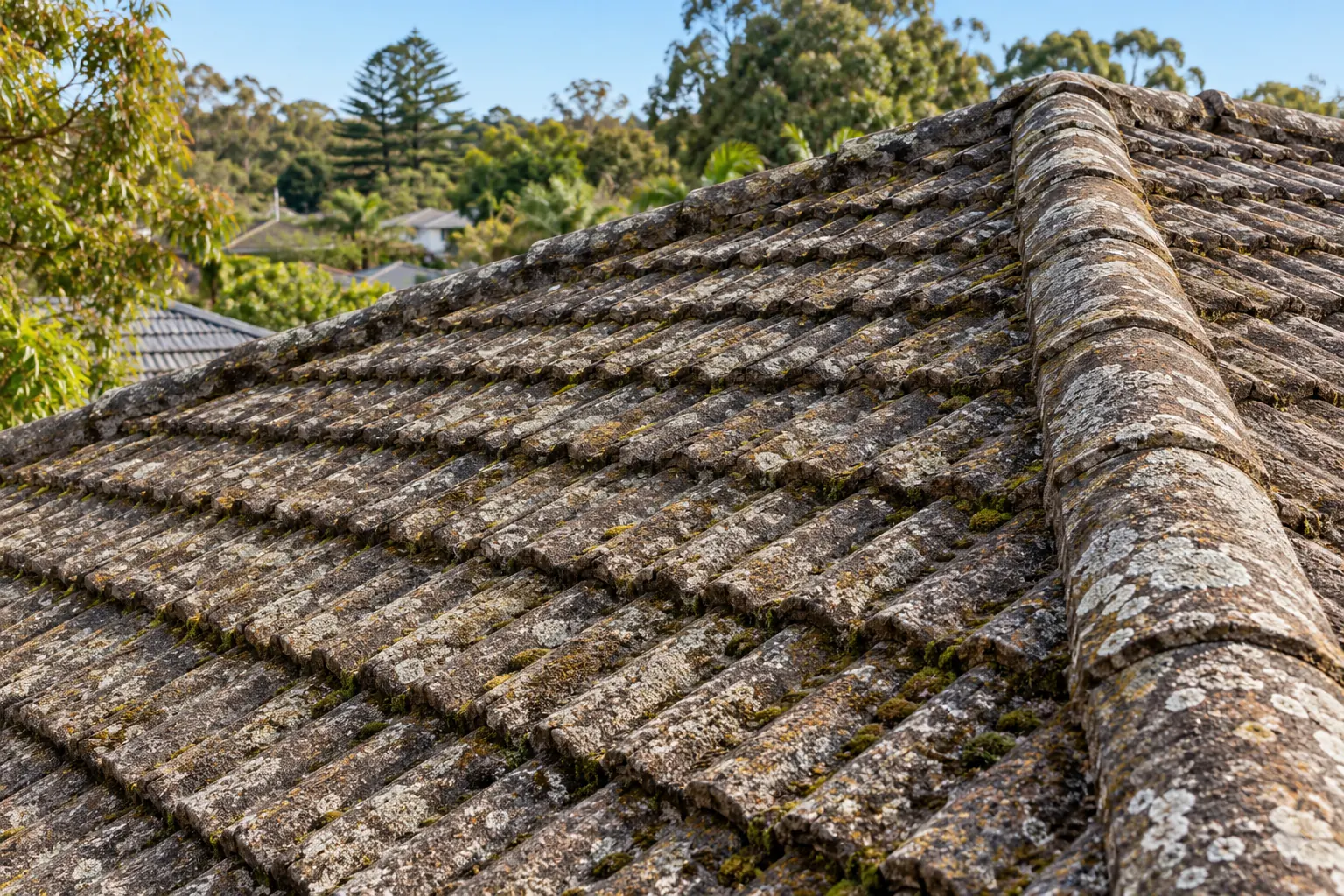
Concrete and terracotta tile is the dominant stock across Gosford, Wyoming, Niagara Park, Berkeley Vale and most of the 1970s and 80s brick-and-tile belt. The usual culprits:
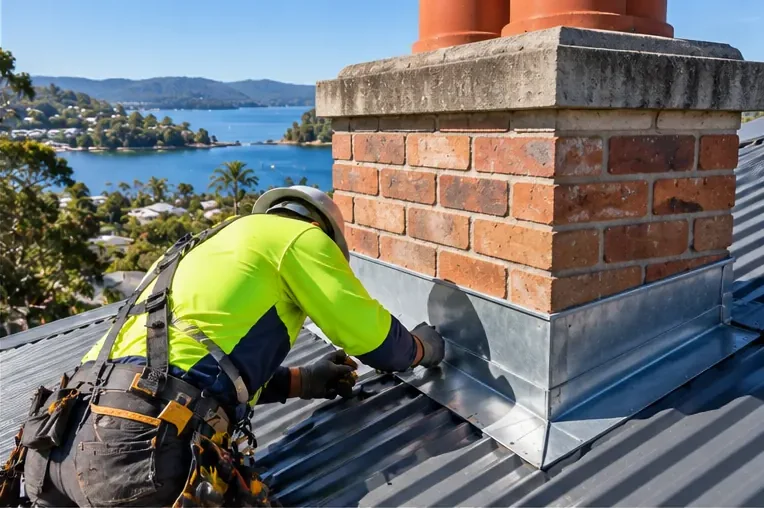
Metal is standard on newer Tuggerah and Wyong estates, on rebuilt waterfront homes and on anything re-roofed in the last two decades. Different faults:
Houses around Tuggerah Lake, Budgewoi Lake and Brisbane Water get caught out by this. Being away from the surf does not mean being away from salt. BlueScope's own selection tables treat calm marine water as a separate exposure category with its own distance thresholds, not as a softer version of surf exposure. Add high humidity, sheltered roof planes that stay damp, and slow drying, and metal around Long Jetty, Davistown or Woy Woy can corrode faster than metal in sight of the breakers.
Every completed repair carries a written workmanship warranty. Work is carried out by established, licensed and insured roofing contractors working to NSW Fair Trading requirements.
A great deal of the original stock on the Woy Woy peninsula, around Ettalong Beach, Toukley and the older parts of The Entrance is fibro from the asbestos era. Where asbestos cement is present in the roof or eaves, two rules govern the job: it must never be cleaned with high-pressure water, and in NSW anyone removing more than 10 square metres of non-friable asbestos must be a licensed removalist. Friable material always requires a licensed removalist regardless of quantity.
Central Coast Council accepts household asbestos at the Buttonderry facility on Hue Hue Road at Jilliby and at the Woy Woy facility, by prior booking, and only where the material was generated inside the Central Coast LGA. If your roof falls into that category, we will say so before pricing anything and set out what the compliant route looks like.
Repair is the right call when the roof is structurally sound and the faults are localised. It stops being the right call when:
At that point we will tell you, and point you at roof restoration if the tiles themselves are still good, or roof replacement if they are not. We would rather lose a repair job than sell you one that will not hold.
There is no honest fixed price. What moves it: how many separate faults there are, roof pitch, whether the roof can be walked safely, access for a ladder and a vehicle, the material, and how far water has already travelled into the structure. A single flashing on a low-pitch Umina cottage and a full ridge line on a steep Terrigal split-level are different jobs.
What we commit to is a written, itemised quote after the inspection, and no work starting until you have approved it.
Call (02) 4307 5050, or send the details through the form and we will come out.
Also useful: storm and emergency repairs if the damage happened in the last day or two, gutter repairs if the overflow is at the gutter line, or the service areas list to check we cover your suburb.
Re-roofing Central Coast homes: fibro beach shacks, 1980s brick and lakeside rebuilds, each specified for its own exposure.
Learn more →Colorbond roofing across the Central Coast, with COLORBOND Ultra where ocean or lake exposure warrants it.
Learn more →Tile restoration across the Coast, rebedding and repointing ridges that salt-laden air has broken down.
Learn more →Gutter replacement in corrosion-rated material across the Coast, plus leaf guard for hinterland properties at Ourimbah and Lisarow.
Learn more →Storm response across the Central Coast after east-coast lows, including make-safe on holiday and rental properties.
Learn more →Roof inspections and written reports across the Central Coast, including absentee-owner and pre-purchase inspections.
Learn more →Usually not. Water enters at a failure point, runs along a batten, a truss chord or the top of the sarking, and drops through the ceiling at the first place it finds a gap — often several metres away and a metre or two lower. That is why we inspect the whole roof plane and the roof space rather than just the stain. Chasing the stain is how a repair gets done twice.
If one or two caps have lifted and the bedding underneath is sound, individual caps can be re-bedded and pointed. If the pointing has gone chalky and crumbles when you press it along the whole ridge line, patching buys a season at most. On the Coast the ridge is usually the first thing to go on a tile roof, because it takes the wind and holds moisture, so we check its full length before quoting either way.
We cover the whole LGA, from Budgewoi and Toukley in the north through to the Bouddi Peninsula, and the drive is factored into scheduling rather than charged as a surprise. Active leaks and anything unsafe get priority over routine inspections. If the roof needs to be made watertight before a repair can be properly done, we deal with that first and quote the permanent fix afterwards.
Yes, and a good share of our work is exactly that. We coordinate access with the tenant or the managing agent, photograph the fault and the completed repair, and send everything to you in writing. You approve the quote by email. Nothing gets done on a nod from someone standing in the driveway.
Tell us what you need and we'll get straight back to you. Prefer to talk? Call (02) 4307 5050 and speak to someone local.
Call (02) 4307 5050